The technological renaissance

Jose Miguel Cortes
COO, Managing Partner
15
min read
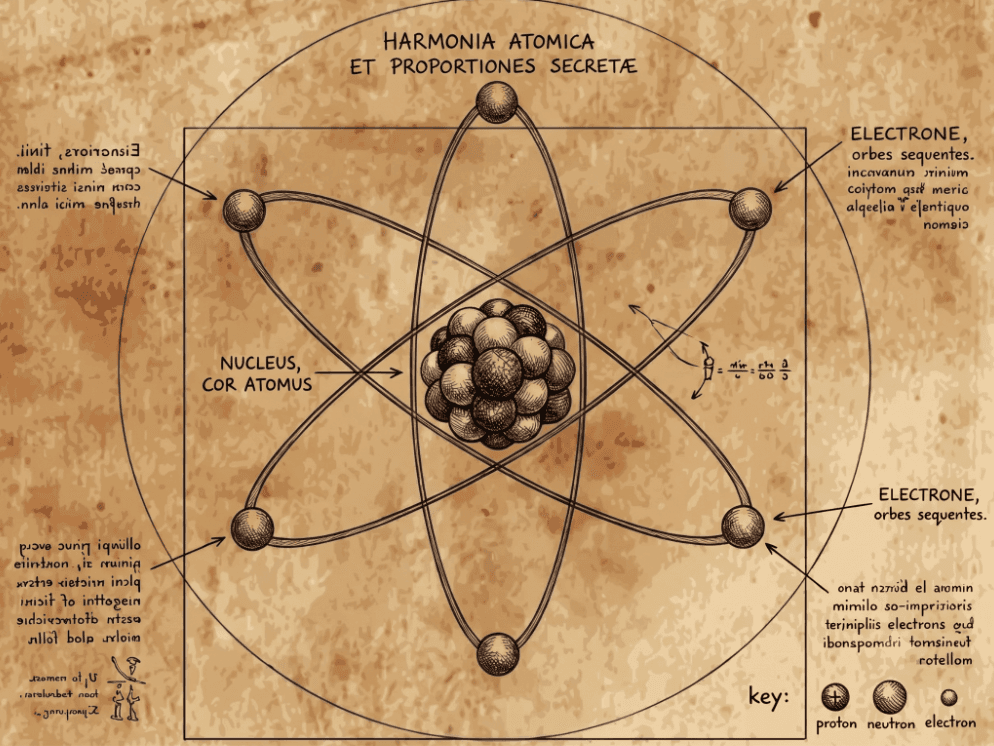
Introduction: Drawing parallels on history.
For those who know me well, my habit of drawing analogies is no secret, and neither is my love for technology and history. I am an industrial engineer by training, and before I moved into finance, my first jobs were on the floor of the metal-mechanic and automotive industries while I was still an undergraduate. That is where I learned to respect physical things: machines, materials, the slow and stubborn work of making something real.
As I look back on the last seventy years of technology and venture capital, I keep seeing a clear parallel between the history of our civilization and the history of tech. The path runs from an Ancient Era, through two very different phases of a Middle Age, into a Renaissance, and finally toward a Modern Era. That last era has been rich enough to deserve several chapters of its own, but I will treat it as one period here to keep things simple.
This is not an academic exercise. For me it is a practical view of how capital should be put to work over the next decades, and I will get to that.
History does not repeat itself in a flat circle. It moves in a spiral that keeps widening, and the similarities are hard to ignore even when the details change. Humanity has moved through the same broad cycles again and again: discovery, then consolidation, then rebirth, and finally deep transformation. But where human history needed thousands of years, technological history moves much faster. What once took centuries in the physical world now takes decades in the digital and scientific one. The context changes; the underlying mechanics stay surprisingly the same. That, at least, is the pattern I keep seeing, and I would rather lay it out plainly and let you judge where it holds and where it does not.
Act I
Classical Antiquity (1950s–1990s): The foundations of silicon and compute.
Civilization began with the basic inventions and raw physical engineering. In classical antiquity, early societies established the fundamental rules of existence: writing in Mesopotamia, geometry in Egypt, legal codes in Babylon, monumental infrastructure across Rome. They built the aqueducts, roads, and concrete on which centuries of trade would depend.
The early days of tech were similar. Pioneers at Bell Labs, Intel, and IBM focused on hardware and basic infrastructure rather than consumer applications: silicon chips, network protocols, operating systems. Because this work required expensive equipment and long timelines, it was underwritten mostly by governments and large institutions. These foundational technologies created the physical base for everything that followed.
Just as Roman roads outlasted the empire that built them, the silicon and networking foundations of this classical era became the bedrock for everything after.
Act II-A
The early digital Middle Ages (1990s–2010s): Empires and vikings.
After Rome, civilizational focus shifted away from monumental engineering and toward local protectionism, fortified castles, and imperial consolidation. The Early Middle Ages saw territorial fiefdoms build wealth by controlling bottlenecks: levying tariffs on bridges and extracting rent from agrarian labor.
The classical era of tech did not disappear overnight either; it fragmented. Monolithic research labs like Xerox PARC and Bell Labs produced fundamental breakthroughs, from Ethernet to the mouse, but could not capture their value. Scrappier newcomers scavenged those ideas to build software empires. If I had to name the equivalent of the 2000 Dotcom crash, it might be the rise and fall of Charlemagne’s empire. He united Europe with remarkable speed and standardized its writing and administration, only for the empire to fracture within a generation of his death, splintering back into the fortified castles of feudalism. I understand the comparison may seem like a stretch, but the mechanism is the same one we saw in 2000: ambition ran ahead of the foundations needed to sustain it. Charlemagne built faster than his realm could institutionally hold, with no durable way to keep distant lords and heirs aligned once the emperor was gone; the 1990s telecom giants and dot-coms, in the same spirit, overbuilt the grand infrastructure of the early internet before there was real demand or revenue to support it. In both cases, enthusiasm outran discipline, and the correction was brutal.
After the crash, technology entered its Early Middle Ages in earnest. Capital panicked and turned away from physics, chemistry, and hardware. Venture capital learned that it was safer, and far more profitable, to build software toll booths on top of existing fiber-optic roads than to take deep engineering risk. Big Tech platforms built digital territories across that landscape: they mapped the online wilderness and installed imperial toll gates, from Apple's 30% App Store cut and Amazon's marketplace fees to Google's and Facebook's advertising tariffs.
Yet just as Viking longships slipped past the castles to open new trade routes, the digital era produced its own borderless raiders. Crypto protocols and fast-moving startups like early Uber and Airbnb operated outside the usual legal rules. They were small and quick, and they slipped past the gatekeepers to force the established kingdoms to pay attention.
This is a fascinating period, in both human and technological history: an age of empires, vikings, hyperscalers, and decacorns. I will admit that many of my favorite movies and shows are set in the early Middle Ages, so perhaps I am a little biased.
Act II-B
The Late Digital Middle Ages (2010s–2020s): Guilds, Feudal Rents, and the First Banking Rails
As the human Middle Ages moved into the 14th and 15th centuries, Europe went through a Commercial Revolution. This was not an era of scientific breakthroughs, and yet, far from being dark, it was an explosion of business innovation and new financial plumbing. Merchant-banking families such as the Medici, whose bank was founded in 1397, built the network of branches that turned the existing tools of cross-border credit into a truly international system. Guilds and feudal estates set the standards for craft, pricing, and land across the cities.
The 2010s–2020s venture wave ran on the same basic mechanics, and I had a front-row seat. In 2009 I co-founded a software and marketplace company for small and mid-sized industrial businesses. It was not a great success, but it taught me something I still carry: I love industry even more than I love software, and I do love software. I wanted to bring modern tools to industrial business owners, and while I could not find the right product-market fit back then, the industrial transformation was, and remains, a real and enormous opportunity. That early lesson is probably one of the reasons I feel so at home in the period we are living through now.
Back then, capital flooded into replacing ownership with permanent software rent. Software-as-a-service and cloud infrastructure became the new domains, moving companies from owning their IT to paying a monthly contribution to the platform lords, AWS, Salesforce, Microsoft, just to work the digital soil.
Marketplaces and gig networks perfected the feudal model: platforms like Amazon, Uber, MercadoLibre, and Rappi supplied the infrastructure while millions of independent merchants and drivers worked the soil and paid a toll at the gate.
Global mega-funds behaved like imperial crowns, handing capital to regional founders across Latin America, Europe, and Asia. These local vassals played the arbitrage game, copying proven models in e-commerce, delivery, and fintech to win their local markets and send returns back to their capital lords. I entered venture capital in 2013, investing mostly across Mexico and South America, and this was exactly the game of the day. Copycat was the strategy, and for a while it worked. I do not say that as a critic looking down on it; I was in the room, and it made sense at the time. But living through it is also what makes the current shift so obvious to me: that era ended, and something far more interesting took its place, artificial intelligence. OpenAI and the models that followed showed the world that machine learning is much more than a way to improve data analytics or streamline a few processes. AI could replace and improve entire businesses, not just parts of them.
Large language models and agents marked both the peak and the end of this era, the same era that built the cross-border rails, secondary markets, and institutional trust needed to happen first and fund what comes next. Just as Medici wealth was ultimately funneled into financing the Italian Renaissance, the global venture boom created the financial engine required for a technological Renaissance to return to atoms. This is the part of the analogy I am most confident about, because the mechanism is real and not merely decorative: the plumbing of one era pays for the breakthroughs of the next.
Interlude
The Heretical Toolmakers: Building the Renaissance inside the Middle Ages
Every era has its heretics, the ones who refuse the prevailing capital consensus. Through the height of the Digital Middle Ages, when capital almost exclusively demanded asset-light software, companies like Nvidia and SpaceX behaved like the late-medieval lens-crafters and shipwrights of Venice and Sagres.
While the market chased digital toll gates, Nvidia spent two decades patiently perfecting a hard kind of computing hardware, its GPUs and the CUDA software around them, and SpaceX rebuilt heavy aerospace manufacturing from the ground up. Both took the kind of physics and heavy-capital risk that almost no one else would touch.
Today it is clear why that patience mattered. Nvidia built the computational printing press for AI; SpaceX built the caravels for the industrialization of space. The most valuable companies of any Renaissance, I think, are the ones that build the physical tools that make the new era possible.
Act III
The Tech Renaissance (Present Day): Re-Enchanting the Atom and Re-Industrializing Society
The historical Renaissance was not merely an artistic flourishing; it was a technological synthesis. It happened when the accumulated wealth and banking rails of the Late Middle Ages were deployed to revive classical physical science, supercharged by new instruments: double-entry accounting, the discovery of new territories, and, above all, the printing press.
We are living through the equivalent today. Capital is breaking out of its purely digital sandboxes and returning to the physical world, re-engaging with physics, chemistry, geology, and biology, but this time supercharged by the computational engines, artificial intelligence, and sensing infrastructure built during the software boom.
For twenty years, venture capital was hooked on pure software for its high margins and low capital intensity. The democratization of code, and now generative AI, has eroded that moat: when many can spin up a software product overnight, software alone stops being a defensible asset.
Real defensibility has moved back toward the physical world: efficient hardware, unique data collected in hard-to-reach places, and physical assets that are protected simply because the laws of physics make them difficult to copy. Just as the Renaissance took its new instruments, the printing press, precise measurement, and fresh capital from the merchant banks, and pointed them at the classical world it had inherited, today's builders are taking the new instrument of advanced computing and pointing it at the oldest industries on Earth. A few examples:
Critical minerals are the fuel of both the energy transition and the AI infrastructure boom, yet legacy exploration remains slow and imprecise. By fusing machine learning with autonomous drilling hardware, new exploration platforms are reading the Earth's crust and turning a centuries-old guessing game into something closer to a predictable science.
Water is our most vital resource. Emerging technologies are bringing molecular filtration and real-time sensing to water treatment, revitalizing decaying infrastructure to secure supply and community resilience.
The basic goods that built early trade, cotton and timber among them, are being remade. Robotics and computer vision are automating cotton processing to bring textile manufacturing back home, while digital tools and automated machines modernize forestry, turning one of humanity's oldest raw materials into a precise, high-efficiency industrial product. These are only a few examples of a much broader return to building physical things.
In the life sciences, computer models can now predict complex biological structures in seconds, while new biotech platforms combine synthetic biology, cell research, and machine learning to find treatments for age-related diseases and for infections that no longer respond to our current drugs.
And just as early ocean explorers needed heavy physical infrastructure to open new maritime routes, modern aerospace pioneers are building the orbital hardware required to sustain long-term industrial operations in space.
This is the essence of the Renaissance. It is not about discarding the digital tools of the software era but about turning them on the physical world, to fix it, automate it, and expand it.
The most valuable companies created this decade will not be the ones that capture attention on a screen. They will be the hybrid builders who pair artificial intelligence, and increasingly quantum technologies, with heavy physical assets, re-enchanting the atom, extracting critical resources, and automating the supply chains the rest of the economy depends on. I should say plainly, though, that most of the capital chasing this shift will be misallocated, as it has been in every previous age. But this time the timelines will often be longer, the physics is unforgiving, and the dispersion between the best and the median outcome is wider than anything the software era trained us for. Selection, not enthusiasm, is the whole game.
Act IV
The Unseen Tech Modern Era: Cross-Regional Physical Economies
After the historical Renaissance, the Industrial Revolution shifted civilization from manual labor to mechanical power. Over the next two decades I expect a comparable shift, in which digital intelligence directly automates and reshapes the physical economy. The first signs are already visible across several industries: energy, manufacturing, and the supply chain itself.
Clean energy is moving toward abundance as advanced geothermal, small modular reactors, and early fusion projects move from the lab into real-world testing. As the cost of clean energy falls, the economics of energy-intensive industries, water desalination, metal refining, chemical synthesis, begin to shift. In parallel, practical advances in robotics and physical AI are making hardware assembly more flexible and cheaper, slowly narrowing the gap between software economics and physical production.
This alters global trade. The old playbook of relying on distant low-cost labor is giving way to regional, automated supply chains, and here lies a natural opportunity across the Americas. By combining technology and capital from the United States with Latin America's critical minerals, agricultural capacity, and established industrial hubs, the region can build resilient, efficient supply chains. Nearshoring is only the first step toward a deeply integrated regional physical economy.
Funding this transition requires a change in how capital is deployed. Software-style expectations of low upfront investment and rapid exits do not fit the reality of building real-world infrastructure. What I believe is emerging instead is a return to longer-horizon, asset-backed models in which industrial families, institutional investors, and specialized funds partner to underwrite more tangible assets.
The modern era was not only progress. It brought social upheaval, world wars, and conflict on a scale the earlier ages could not have imagined, and I expect the technological version of this era to have its own parallel. It will not be only roses. Perhaps that is exactly where we need to apply the lessons history has already taught us, to soften the worst effects of these revolutionary changes rather than relive them.
Conclusion: Managing Capital in the Transition
The outsized returns once generated by software platforms and consumer apps are slowing, and even some of the earliest AI-native companies are feeling it, while the momentum behind hard science and physical engineering keeps building. The move toward solving physical problems is not a distant forecast; it is already underway in mines, farms, water systems, and energy grids.
For investors, industrial families, and business leaders across the Americas, the path forward is reasonably clear. Evaluating physical technology means stepping away from software-only metrics and looking hard at the long-term value of real engineering, and it means accepting that most bets will fail so that the few that work can carry the portfolio. By connecting lab-proven breakthroughs to the factories, farms, and infrastructure of our shared trade corridors, we can build durable businesses that strengthen the physical foundation of our economies for decades. I do not believe this is the end of digital businesses. But they will now need new moats to defend their value and secure their future.
We are exiting the tech equivalent of the Middle Ages, moving into a Renaissance, and standing at the threshold of a Modern Era that will rewrite the rules of global industrial power. And we all know what the historical Renaissance led to: first the Scientific Revolution, then the Industrial one, and the rest is history. If you follow the parallel through its cycles, it becomes hard not to feel that the next technological period is almost unthinkable in scale, in the most exciting sense of the word.
I know these parallels live mostly in my own imagination. But I do not think that makes them untrue. What I find striking is how fast progress is now arriving, so fast that many people seem to have lost their capacity for amazement. I find that partly sad and partly wonderful: sad because we are living through something extraordinary and treating it as ordinary, and wonderful because it means the extraordinary has become our new normal. Either way, this is the map as I read it, and I have tried to be honest about where its lines are firm and where I am still drawing them.
José Miguel Cortés
30 July 2026

